Team Members
Problem and Solution Overview
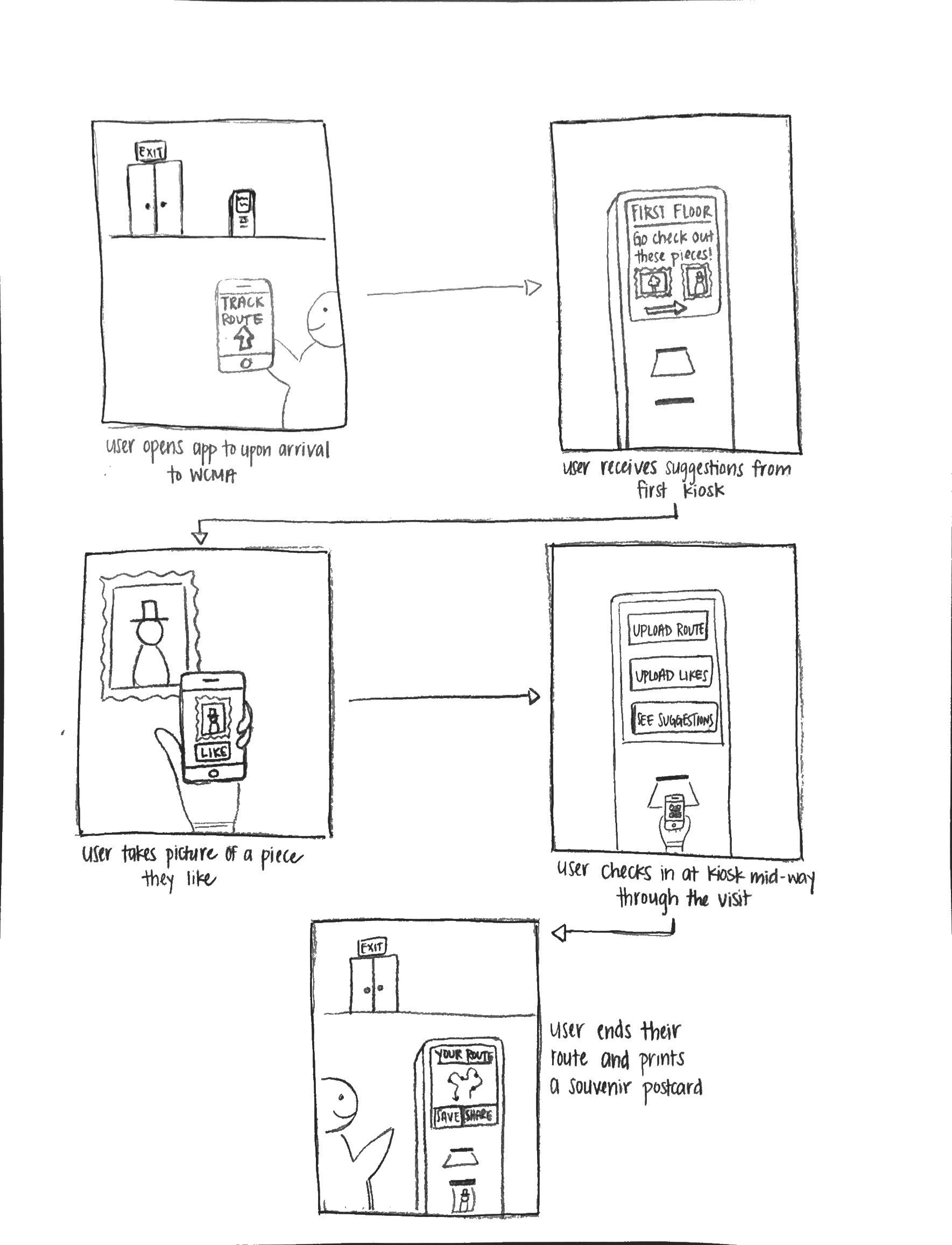
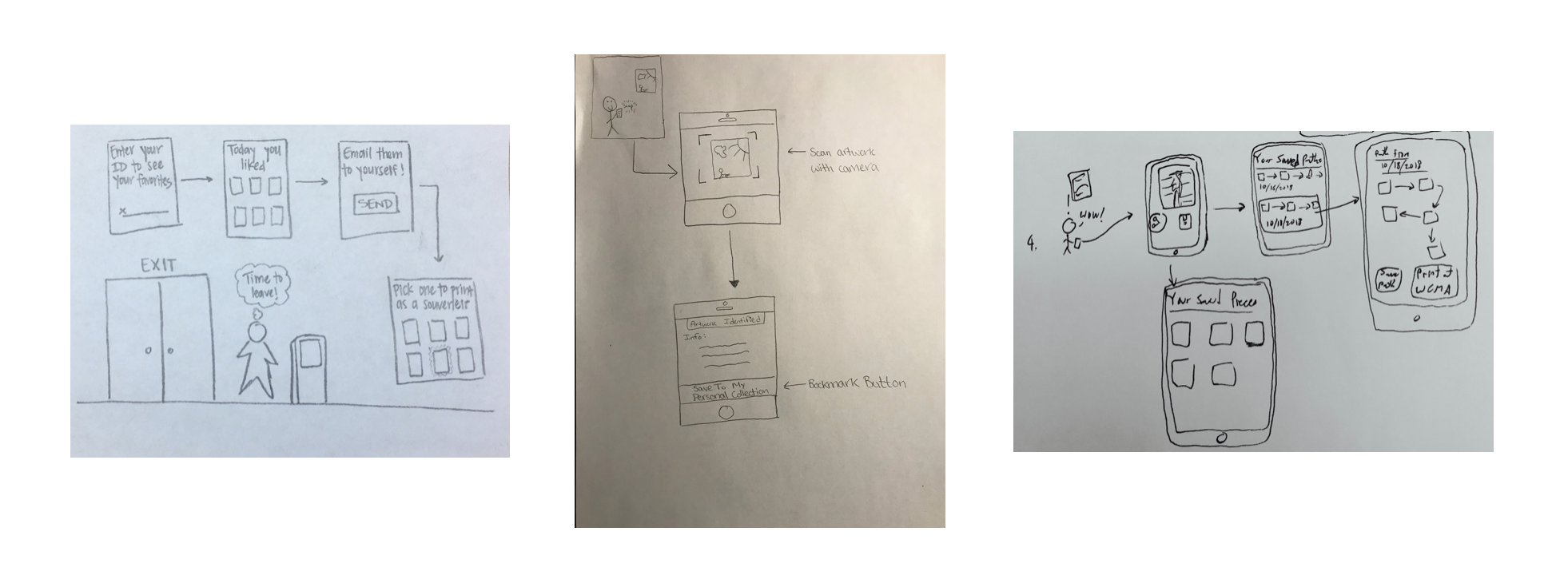
At SWCMA, we operate under the belief that the most meaningful souvenirs one can bring home from a museum are memories of the experience, but when a visitor is confronted with meandering paths through a maze of galleries and no map to help them find the way, how can they chart their own journey through a museum in a way informed by their own tastes and interests? Our solution is a mobile platform used in conjunction with kiosks stationed throughout the museum that centers around letting users organically build routes for themselves through WCMA based on the art they love most and the academic topics about which they are passionate. The platform will allow users to save and share bespoke, interpretive route maps through the museum and to get creative with the countless shapes that these maps can take. Through building maps for themselves and others, users will be able to gain insight into WCMA’s collection and curating while building a personal profile around their artistic and academic tastes.
Design Research Goals, Stakeholders, and Participants
Three contextual inquiries were conducted with the goal of understanding how various user groups navigate the museum space and experience WCMA as a whole. We interviewed a current WCMA staff member who has knowledge of both the artwork as well as how the space was designed to be experienced by visitors, a student with deep knowledge of the WCMA collection who visits the museum often, and a first year student who has never previously been to WCMA. The contextual inquiries took place within WCMA. Interviewees were asked to walk through the museum and to enjoy and art as they typically would if we were not with them. The three CIs provided a behind the scenes perspective into the thought and motivation behind WCMA’s exhibits as well as the viewpoint of both an avid and new user of the space. In this way we were able to attain data on users with varying degrees of knowledge on WCMA and the art within it.
Design Research Results and Themes
The main theme of our design research was that of wayfinding being inherently complicated within WCMA. WCMA has many possible paths from its entrance and infinitely more through its exhibits. This can lead to another observed theme that we have dubbed institutional confusion – a negative part of user experience where visitors become confused about where to go, what they can do, and/or what kinds of things are available at WCMA. The other themes we observed in our inquiries related to visitor interaction with the museum and its collection – what kinds of emotional and sensory reactions they felt, how they felt they were able to engage with the broader collection rather than just the works on display, and their reactions to textual information. Related to this theme is the question of where to look – wayfinding for one’s eyes is just as crucial of a choice in a museum; this was demonstrated to us when both Williams students, each with vastly differing levels of experience with WCMA, described the angles, duration, and order of viewing that they employ when gazing at objects. A user should be able to decide and interpret their own path through the museum – our design aims to make these decisions fun and exciting, rather than intimidating.
Task Analysis Questions
Our design is going to be used by any and all museum visitors within WCMA. At this point, our users perform the standard tasks associated with visiting a museum, such as wandering exhibits and looking at art. However, we define our desired tasks to be:
- Discovering works that otherwise would have been overlooked
- Conveying personal artistic preferences so the product can tailor itself to each user specifically
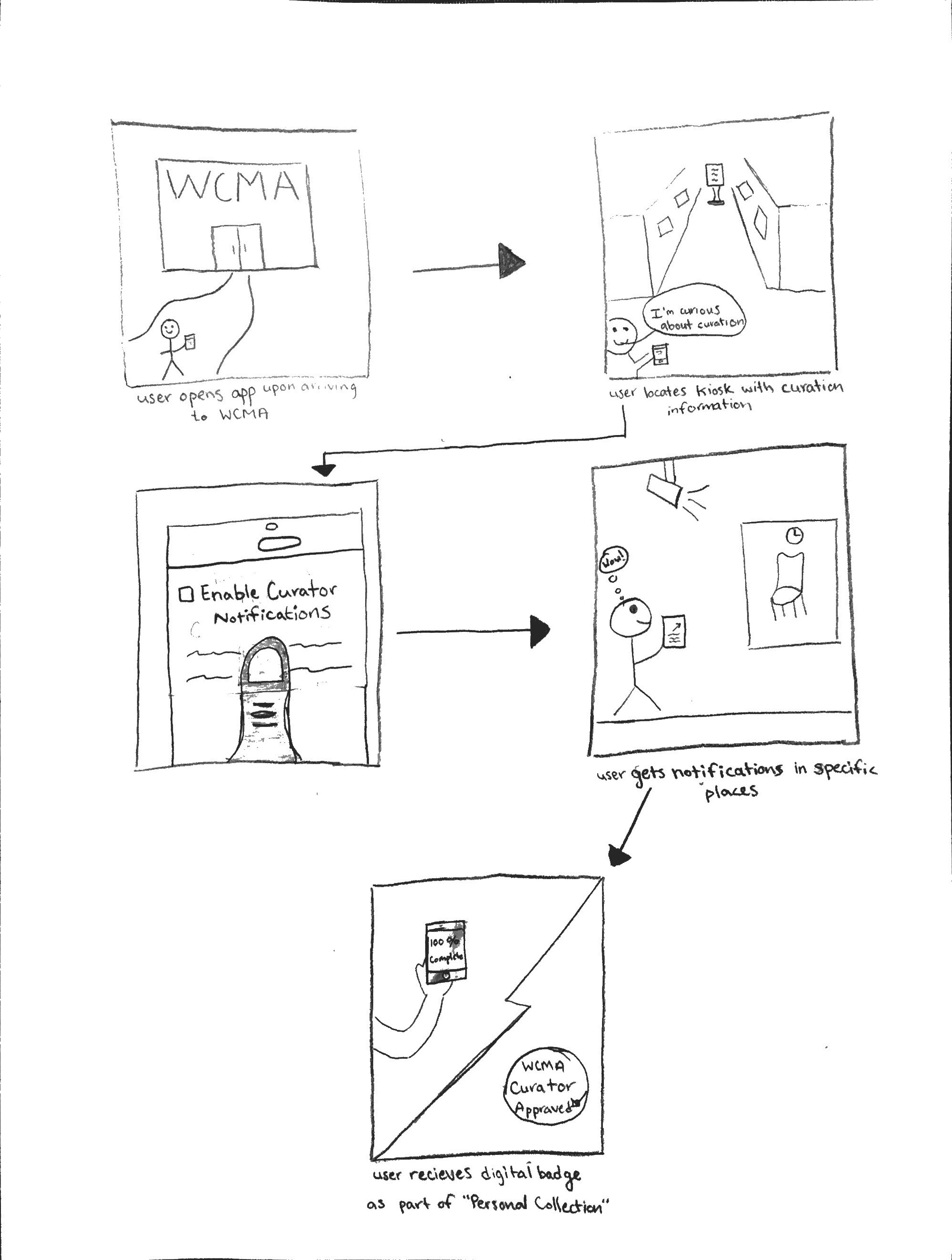
- Learning about the curator’s perspective and vision for the exhibit
- Continued engagement with the users favorite or most memorable pieces
- Learning more about the collection as a whole, most notably introduction to the virtual collection
- Gaining agency in one’s museum experience
The new tasks will be learned through prompts in the design, while the existing tasks will simply need to be introduced to the users along with the tools to achieve them, also built into the design. Our users will relate to the data in a personalized, and engaging manner that gives them agency in their visit. Outside of the technological tools our design provides, users also have the WCMA website, in-museum guidance, and WCMA staff members as tools to guide their visits. Users communicate with each other both in person and through the act of sharing their maps. While sharing maps happens only once during the visit, the other tasks are performed in between exhibits and occasionally in the exhibits. These tasks would span the duration of the visit, and should anything go wrong during that time, the users could seek technical help from the kiosks, or simply restart their visit.
Proposed Design Sketches
Written Scenarios
Written Scenarios and Design Choice Overview
Storyboards