When I first entered the design process, I expected it to be a series of decisions about what colors and fonts to use, or how big the buttons should be. But low and behold, there is so much more to design than surface-level aesthetics.
Beyond the ever difficult task of developing an interesting and unique idea, come the tasks of catering it to future users, maximizing its intuitiveness, ensuring accessibility, and much much more. I quickly found that all of these issues had to be addressed before we even had a moment to consider what color we wanted our buttons to be.
Two Heads Are Better Than One
Approaching the process of determining the best solutions to these concerns was daunting to say the least. So we started at the beginning, trying to define who our user was and what they needed, a task that proved fruitless until we did our first couple of contextual inquiries and spent some time creating an affinity diagram. As we went over the information we had gathered, we started brainstorming and bouncing ideas off each other until we finally arrived at what we thought was a solution to our users’ needs. Then we went our separate ways and each created a series of design sketches for different implementations of our six core tasks. When we came back together, we realized we had each prioritized different tasks and thought about them in the context of our design in completely different ways. So put our heads back together to determine which implementation we wanted to move forward with, then split again to create storyboards and again returned with discontinuous designs. This same process continued with other steps of the design process.
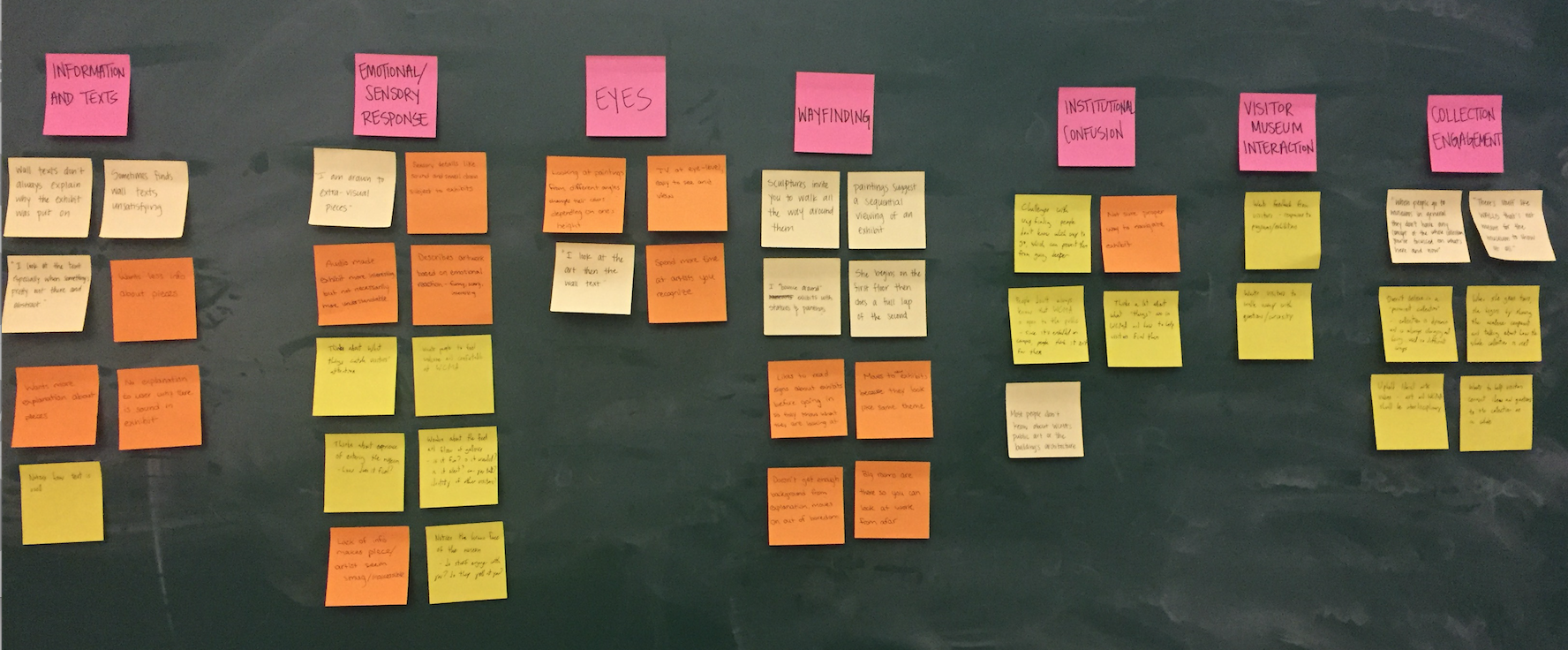
After only a couple iterations, the pattern became clear. Working separately from each other helped us develop an array of ideas, but it wasn’t till we reunited and designed together that we took any steps forward with our design. Alone our minds worked on a single track, producing only one concept of how to create our design. But coming together to do things like affinity diagram and brainstorm allowed us to pool all of our ideas and build off their variations to create something even better than any of us came up with alone.
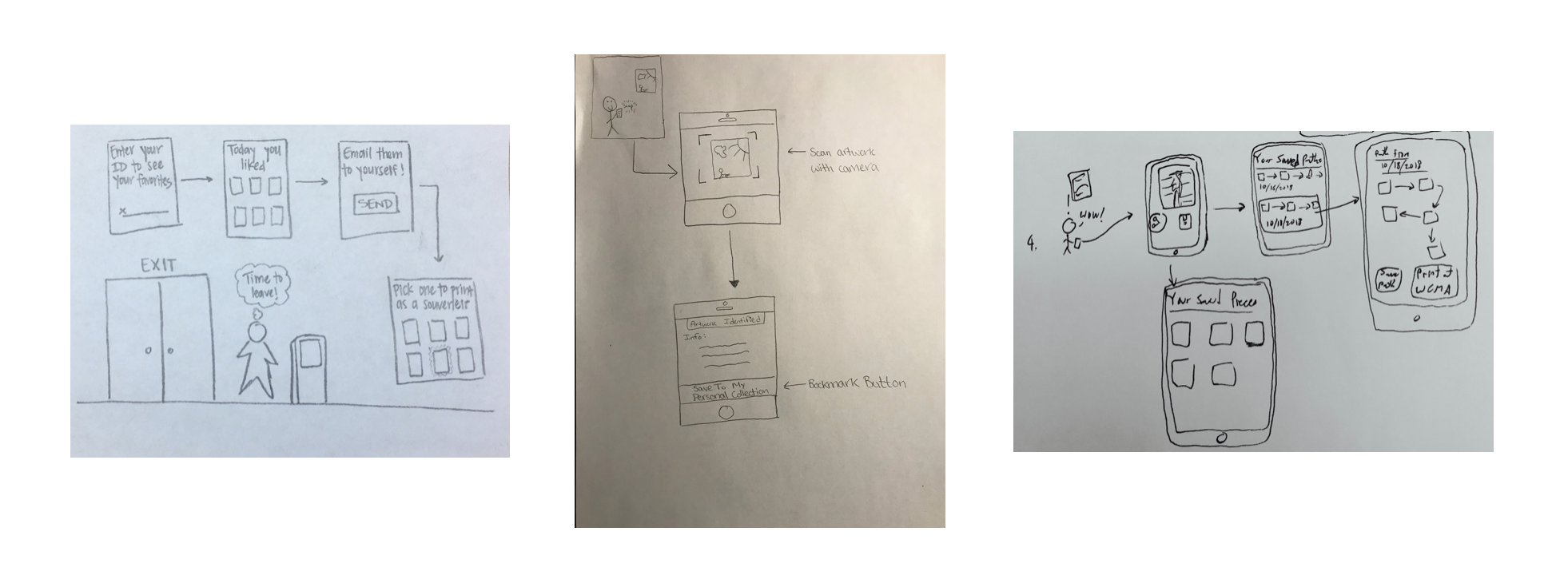
And it wasn’t just the multiple heads in our group that we benefitted from, it was also our potential users who helped us realize design elements we would have never even considered previously. Through processes like contextual inquiries, paper prototyping, heuristic evaluations, and many more, we were able to incorporate the insights of even more people with importantly different stakes in our design.
You Are Not Your User
More specifically, performing these processes that forced us to interact with people outside our group revealed a critical pitfall which is that none of our users will have the same insight or thought process as us. In other words, we were not the people we were actually designing for.
Every time we developed an iteration of our design, be it a storyboard, or a paper prototype, we thought we had it nailed. We thought it was perfectly intuitive, captured everything a user could want to do, was in short, the perfect solution. But then we would perform tests with users and discover things like we didn’t think to include a back button or a help menu. Or maybe even that no one wants to learn more about a piece of art they strongly don’t like.
With each test we ran we learned something new from our users and our design improved. And each time we changed our prototype (tricky with paper prototypes — make sure you always have scissors and tape handy!) we thought we had finally arrived at the perfect solution, sure that the next user would have nothing but praises to sing for our wonderful design.
But, of course, there was always some way to improve (including entirely rethinking the implementation and purpose of our design).
It Can Always Be Better
If it was possible to create a perfect design right out of the gate without ever making a single improvement, new products would be popping up like wildflowers. But they don’t and it’s because design takes time and countless iterations of redesign. And at the end of the day, (well actually, there is no “end of the day”) a design will never be as good as it possibly can be, because the infinite truth is that it can always be better.
Sure this means that a button can always be changed to be a more perfect size, or a phrasing can always be more intuitive, but most importantly, it means there are always steps that can be taken to make the design more accessible.
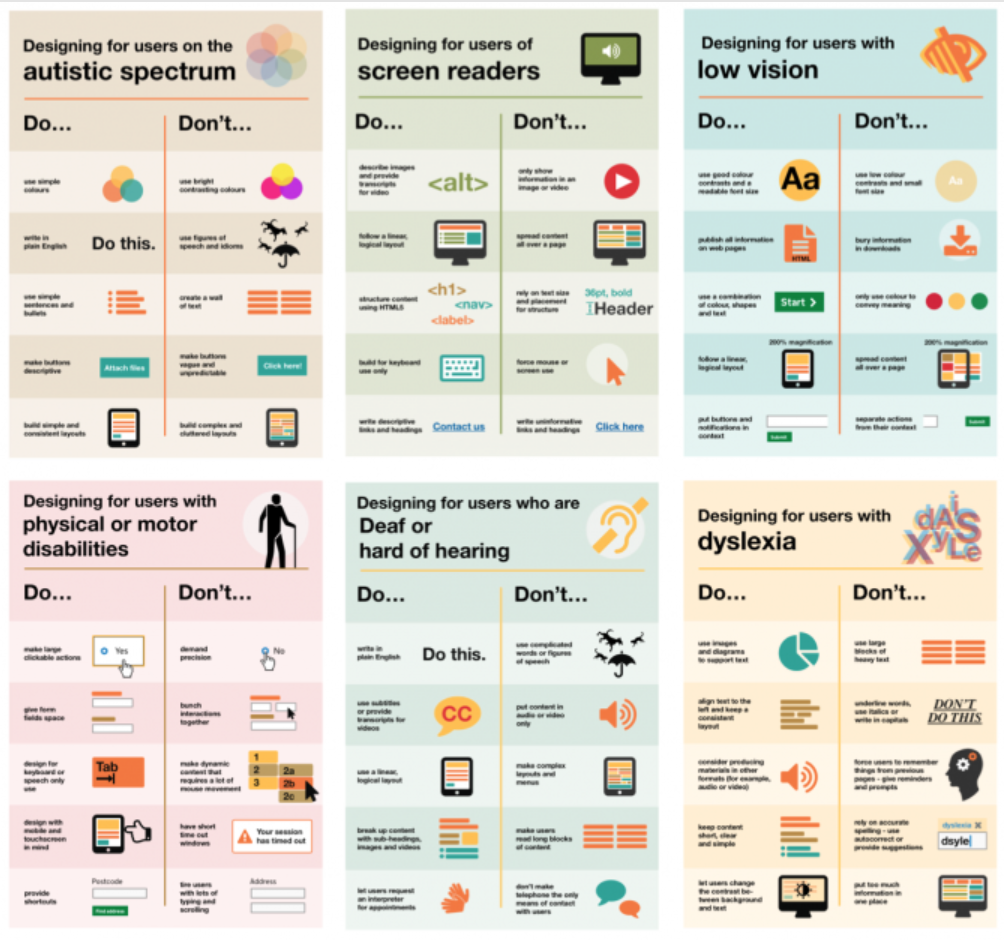
For instance, we tested our design on exclusively able-bodied individuals. But what if someone with limited mobility wanted to use it? Or maybe someone with impaired vision or color blindness? Considerations like these are infinitely important in the design process, but addressing them can sometimes be tricky and non-obvious.
The obvious approach would be to have people who need accessibility accommodations test the design while it’s still a work in progress. However, it can be difficult both logistically and personably to locate such individuals. We performed all of our tests on able-bodied individuals because we didn’t know of any non-able-bodied people who could do our test, and didn’t know how to go about soliciting them without simultaneously ostracizing or making them feel inferior.
So we turned to the next best solution: existing research.
Don’t Reinvent the Wheel
Many accessibility accommodations are general enough that they can be applied to a wide variety of designs. For instance, extensive research has been conducted to determine the color combinations that prove challenging for people with various types of color blindness. So instead of burdening ourselves with the task of finding people with color blindness and testing our design on them, we simply looked into existing research to ensure that the colors we used would still make our design accessible to people with color blindness.
Beyond pulling from existing accessibility research, we also found that it was best not to reinvent the wheel when it comes to design formatting.
Yes, everyone wants to create the next new and exciting thing, or discover the better way to do something, but some things just work better because they are so universal.
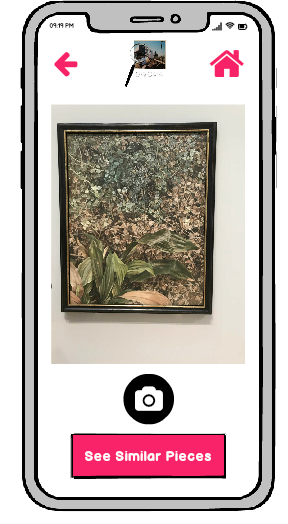
Nowhere was this more clear then when we were creating our digital mockup on Balsamiq and readily used the preexisting templates and design interfaces to create an intuitive design that almost every user would be able to operate simply through its familiarity. Because at the end of the day, a completely novel app camera design may be exciting, but if no one knows how to use it, its excitement is rendered useless.
Do the Right Thing
The topic of accessibility naturally precludes a discussion on ethics. The design process is long and arduous and at many points I wanted so badly to cut corners. But I know that not only would that hurt our design, but it could easily lead to unethical practices.
Design is not only about creating something functional, but doing it in a way that doesn’t victimize anyone, which leads me to my personal code of ethics — some of which I entered the design process with, and some which I discovered needed to be made explicit:
- Do not gather, store, or distribute users’ data without explicit consent
- Many companies and organizations have gotten in trouble for mishandling of their users’ data, much less the annoying mail lists you’re constantly accidentally subscribing to. In order to avoid any uncertainty about how our users’ data was being used, we inserted a disclaimer informing them that we would never store their data nor use it to contact them. Clarity is key!
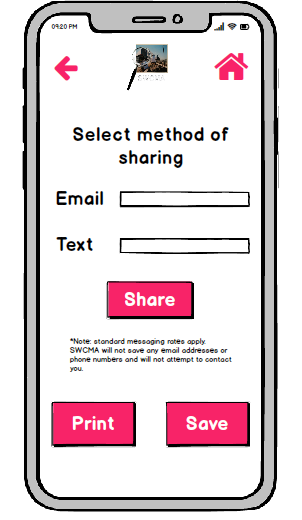
- Do not perform any kind of experimentation or research involving the users without their explicit consent
- The design process is chock full of experiments, but the key is to always ask for consent before performing them, and to certainly never perform experiments on users via the design itself without consent. Clarity, clarity, clarity!
- Be sure the design is accessible to every possible user, such that it never ostracizes or excludes anyone
- As previously mentioned, not catering the design to everyone suggests that some people are unworthy of using it, and in turn, somehow inferior. On the simple standard of human dignity, no person should be made to feel this way, and so the design must meet everyone’s needs.
- Always put the users’ needs and wants first
- At the end of the day, the users are the most important stakeholders, and are the most at risk to be affected negatively by an ethical violation. If they’re always put first, a mindset is created that naturally remains ethically sound, and removes the temptation to do something unethical.
- Treat your coworkers with respect
- This one doesn’t always seem obvious as an ethical concern because of its internal nature. But throughout the design process, I worked so closely with my team that had our relationship been ruined by disrespect, our design never would have succeeded. Even beyond that, I was able to walk away from the project with not only teammates, but true friends!
Embrace the Process
Looking back at the journey that is the design process, I realize that it wasn’t just the individual steps, but the process as a whole that taught me so much about what it means to be a designer.
There were certainly times when I couldn’t fathom recreating our paper prototype AGAIN, or meticulously performing a cognitive walk-through; but without each and every one of those steps, our design would not be what it is today. And it wasn’t just the tests themselves, but the time we were forced to spend thinking critically about our design in the context of the tests that led to some of the most profound improvements. So that’s why I say “embrace the process” because it does work and it is only through the full commitment that the magical breakthrough moments occur.
But beyond that, the design process has taught me how to work in a team, the importance of fostering good professional and personal relationships with group-mates, and what it means to be an ethical designer. And these are all lessons that I will carry with me in all future projects both in and outside of the design world. Because if you don’t enjoy the process, you’ll never be happy with the result.